Fill Tires with Water
LX009450-UN-03JAN95
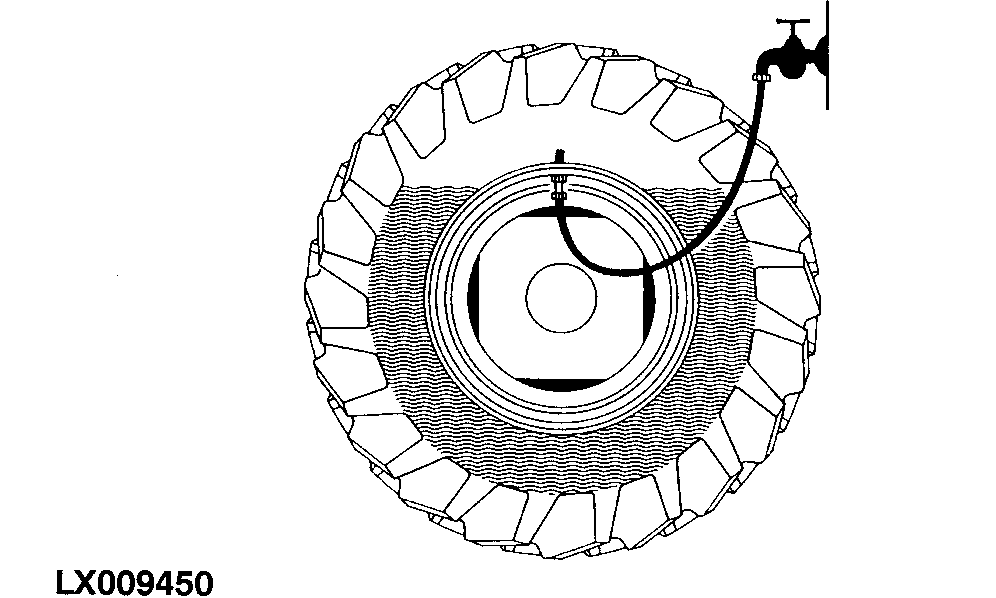
To fill the tire, jack up the wheel and turn the tube valve to the top. Instead of the valve insert, screw the water valve onto the valve stem. While the water is flowing in, air escapes through the opening at the side of the water valve. Stop the filling when water flows out of this opening. Depending on the size of the tire, this takes 15 to 30 minutes. Subsequently replace the water valve with the valve insert and pump up the tires to the normal air pressure. The possible fill capacity of the tire depends on the tire size and manufacturer. If necessary, ask an authorized dealer or the tire manufacturer.
If there is risk of frost, add anti-freeze solution. The tire manufacturers recommend a solution consisting of water and calcium chloride.
The antifreeze solution can be drawn in from a container placed higher up, by means of suction. A faster option is using a pump (rinse the pump with clear water afterwards). To make 100 l (26.4 U.S. gal.) of anti-freeze solution that is effective down to -25° C (-13° F), dissolve 34 kg (75 lb) calcium chloride in 86 l (22.7 U.S. gal.) water. This solution adds 120 kg (269 lb) of weight. Add the calcium chloride to the water, not vice versa. This anti-freeze solution must not be used for the radiator.
NOTE: On tractors with 50 km/h (31 mph) transmissions., it is not recommended to fill tires with liquid ballast.
|
LX,OSPU 000250-19-20151202 |